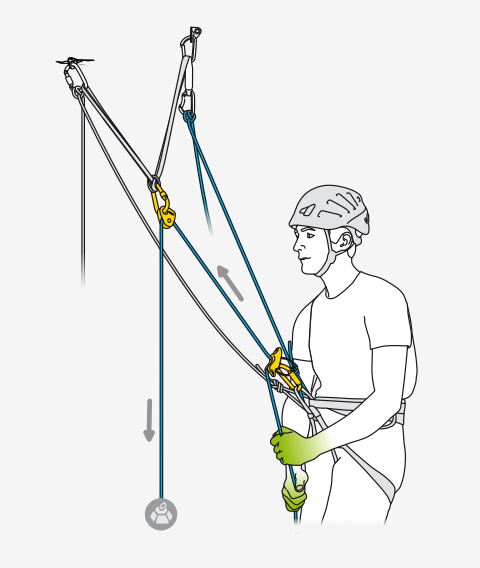
Lowering a load with the cam deactivated
Expert Techniques
Warning
- Carefully read the Instructions for Use referenced in this Tech Tip before reading the Tech Tip itself. You must have read and understood the Instructions for Use to understand this supplementary information.
- Performing these techniques requires specific training. Work with a professional to confirm your ability to perform these techniques safely and independently before attempting them unsupervised.
- We provide examples of techniques related to your activity. Other techniques not described here may also exist.
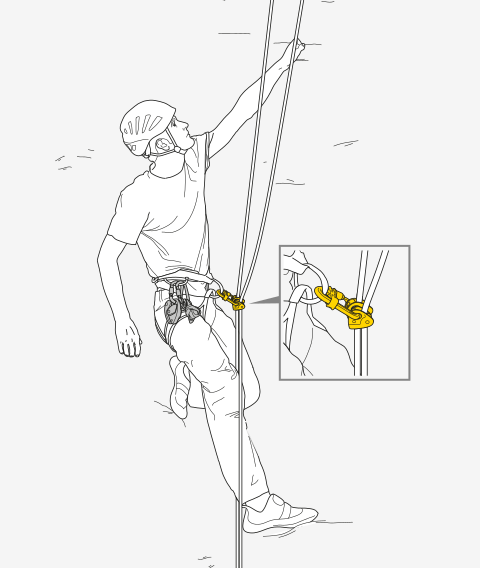
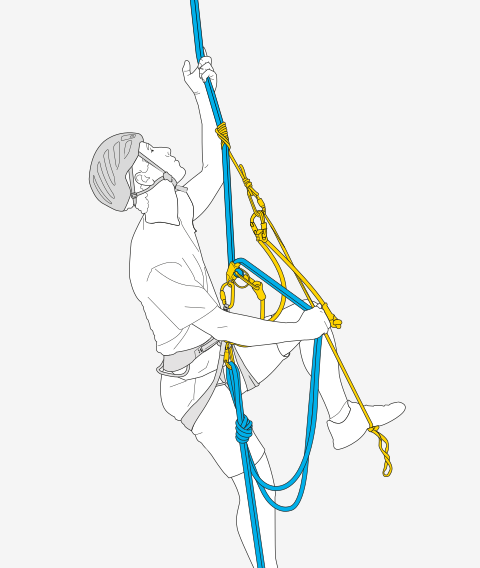
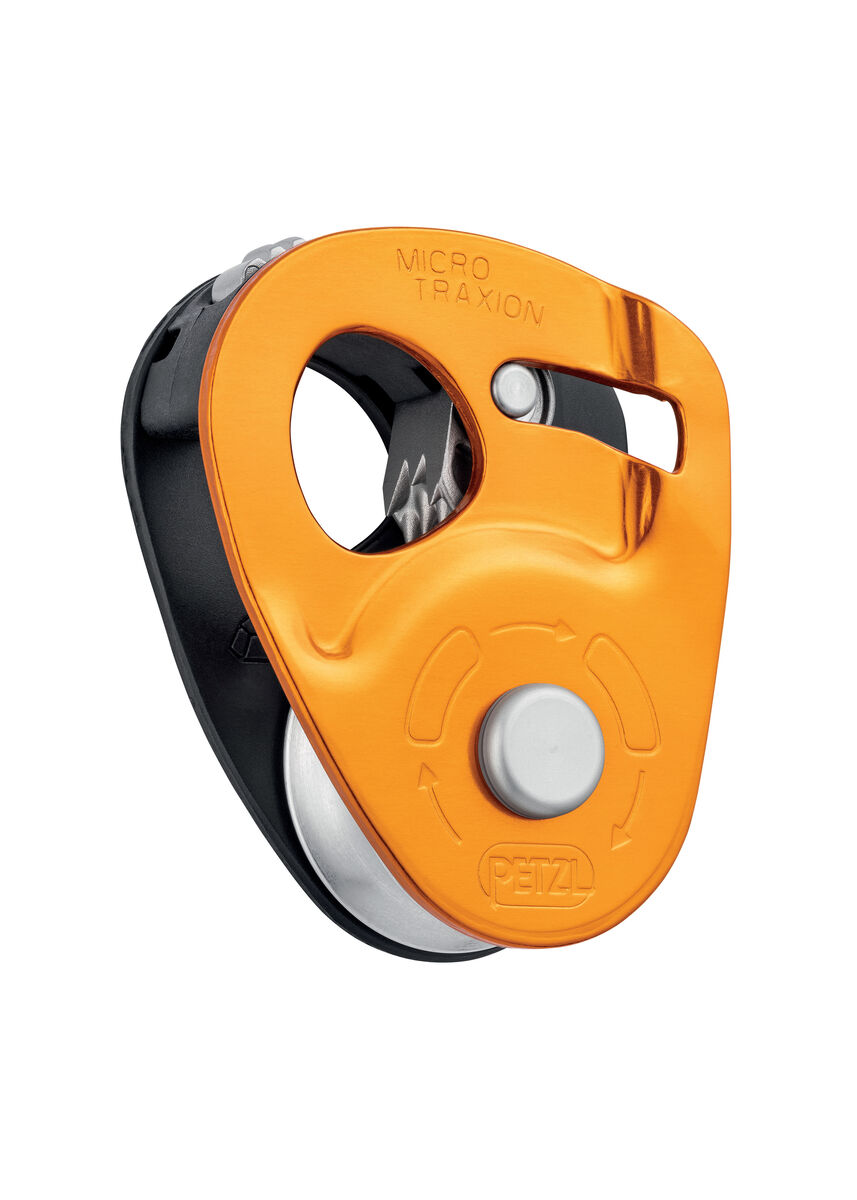
Before deactivating the cam, it is necessary to install a braking system that allows you to hold the load and control the descent. With the MICRO TRAXION in simple pulley mode, a REVERSO on the harness is a good solution.
1. REVERSO installed on the harness
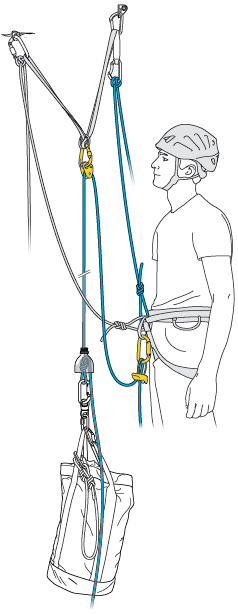
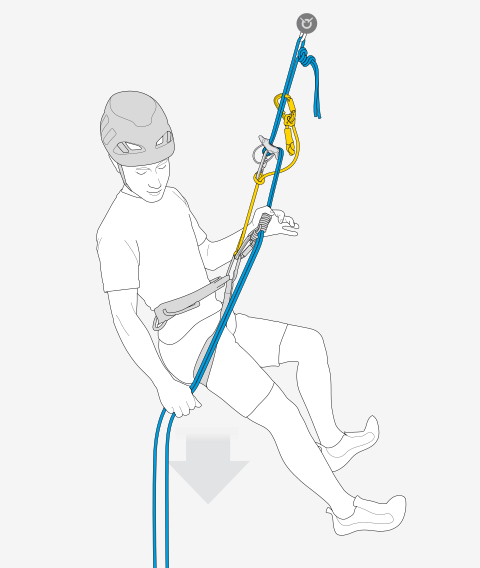
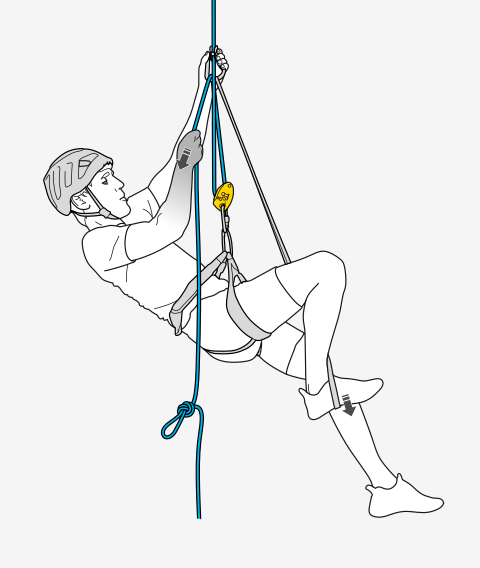
2. Belayer taking the load and deactivating the cam
When the belayer takes the load onto themself, the tension in the rope allows the MICRO TRAXION’s cam to be deactivated. Push the button, then release it to hold the cam in the raised position.
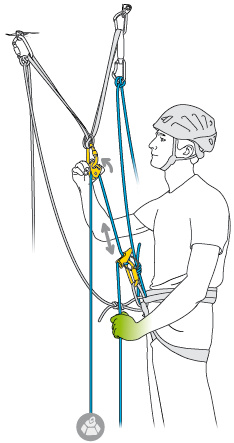
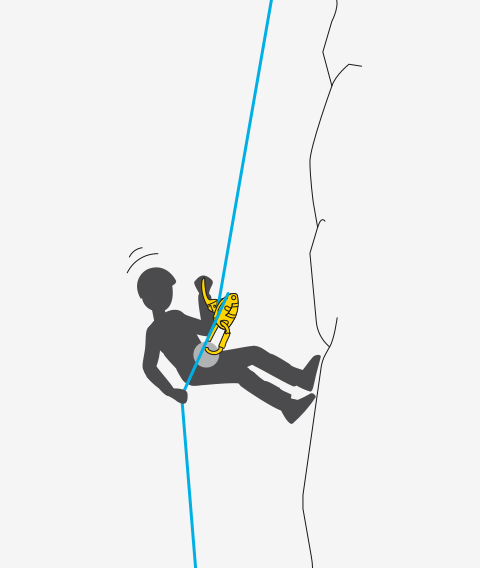
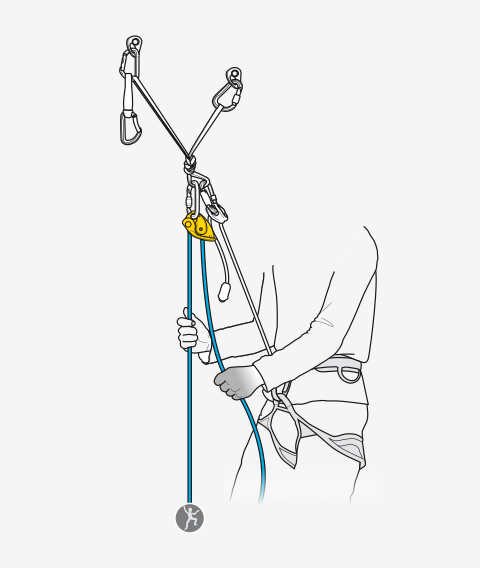
3. Lowering the load
The descent speed must be moderate, to limit the shock load in case the cam re-activates itself.
This can happen in case of vibrations, the cam pressing against the rock or equipment, or due to rope movements.
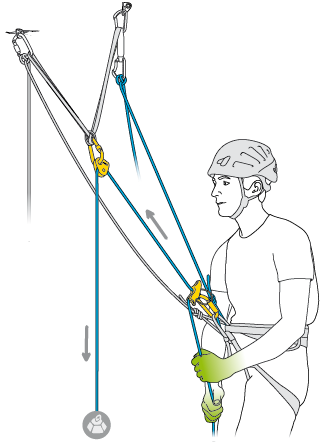
Warning: the pulley at the redirect point significantly reduces friction (about half the friction of a carabiner). In case of jerks during the lower, the belayer can be pulled toward the pulley, especially if his stance is unstable.