What is an explosive atmosphere (hazardous area)?
Product Information and Specifications
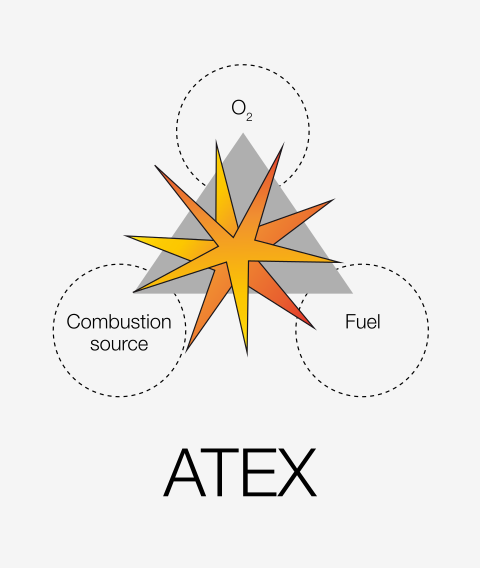
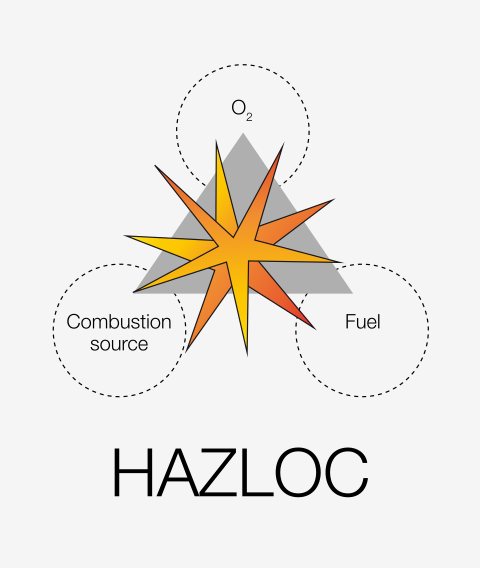
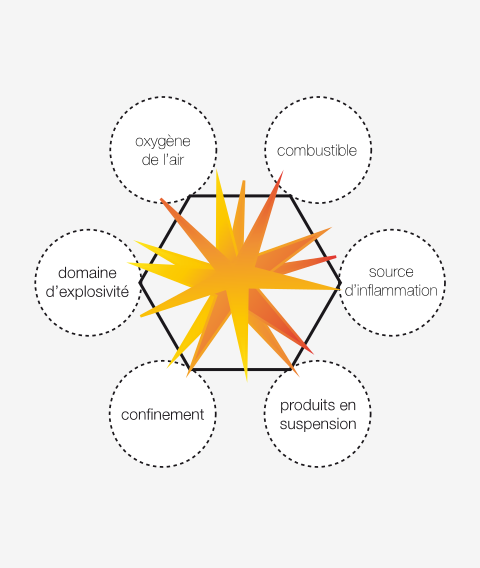
There is a risk of explosion when six conditions are simultaneously met:
Warning
- Carefully read the Instructions for Use referenced in this Tech Tip before reading the Tech Tip itself. You must have read and understood the Instructions for Use to understand this supplementary information.
- Performing these techniques requires specific training. Work with a professional to confirm your ability to perform these techniques safely and independently before attempting them unsupervised.
- We provide examples of techniques related to your activity. Other techniques not described here may also exist.
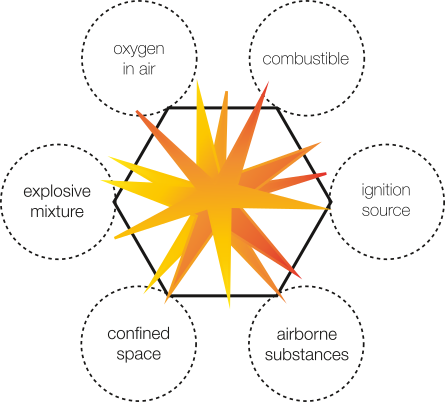
1 - Presence of an oxidant: the oxygen in air, for example.
2 - Presence of a combustible substance: flammable substance such as gas, vapor, powder or dust.
Several examples of combustibles:
Gas: methane, acetylene, butane, propane, hydrogen...
Vapors: ethyl alcohol, carbon disulfide, acetone...
Dust: wood, sugar, grain, starch, coal...
3 - Presence of an ignition source, which is a source of energy strong enough to ignite the combustible: this can be in the form of a flame, a spark, or a high temperature.
4 - Presence of combustible airborne substances (gas, dust, aerosols...), propagation factor.
5 - Confined space: for example a vehicle, work space...
6 - An explosive mixture (threshold), which means having attained a concentration of the combustible substance in the air sufficient to make an explosion possible.