How is lighting performance measured with the ANSI/PLATO FL1 protocol?
Basic Techniques
Warning
- Carefully read the Instructions for Use referenced in this Tech Tip before reading the Tech Tip itself. You must have read and understood the Instructions for Use to understand this supplementary information.
- Performing these techniques requires specific training. Work with a professional to confirm your ability to perform these techniques safely and independently before attempting them unsupervised.
- We provide examples of techniques related to your activity. Other techniques not described here may also exist.
ANSI/PLATO FL1

Brightness (lumens)
This measurement is taken between 30 and 120 seconds after the headlamp is turned on. It indicates the maximum light output, when the lamp is first turned on, using new batteries.

Lighting distance (meters)
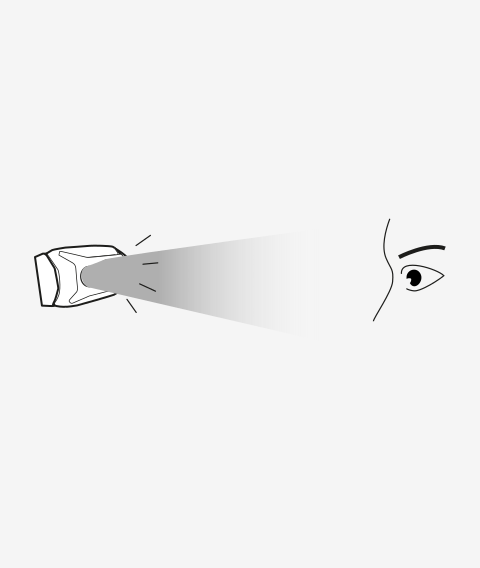
This is the maximum distance between the lamp and the location where only 0.25 lux of illumination remains. The measurement is taken when the lamp is turned on, using new batteries. Lighting distance depends directly on brightness, but mainly on the shape of the beam.

Burn time (hours)
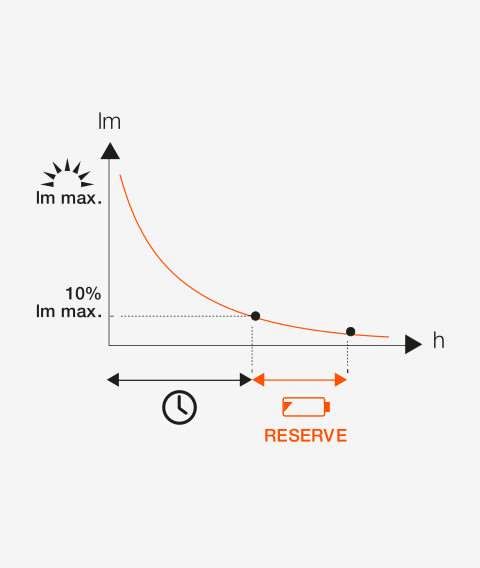
This corresponds to the length of time during which lighting is optimal. It is measured 30 seconds after the lamp is turned on and for as long as the lamp takes to drop to 10 % of maximum light output.

Reserve lighting (outside the scope of ANSI/PLATO FL1)
In addition to these measures, Petzl guarantees reserve lighting. Reserve lighting provides enough light for walking. However, the light may not be sufficient for fast-paced activities (such as running, mountain biking, skiing...).
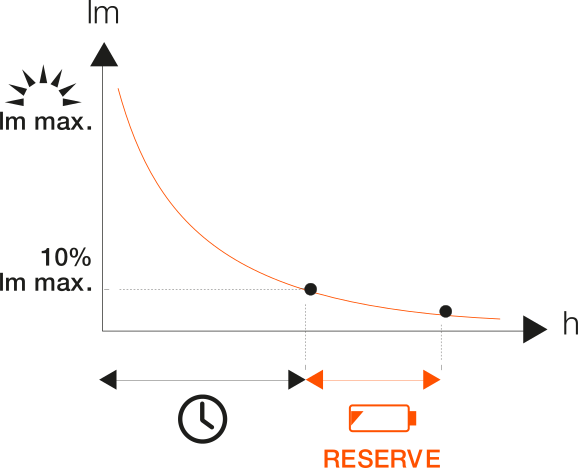
Example of a light output curve for a STANDARD LIGHTING headlamp.