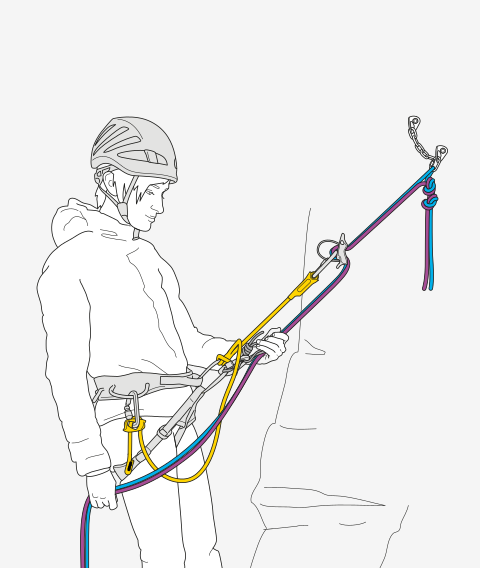
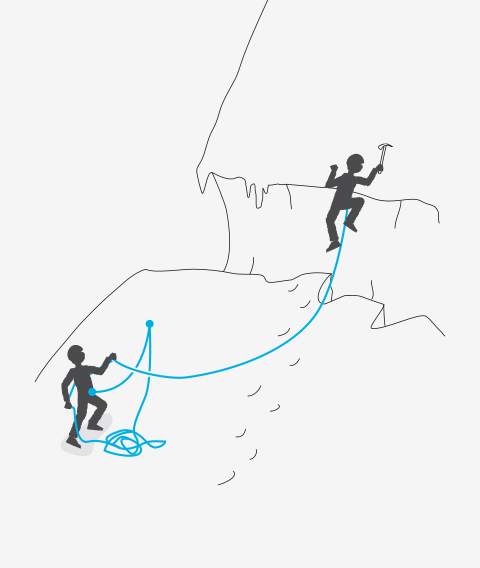
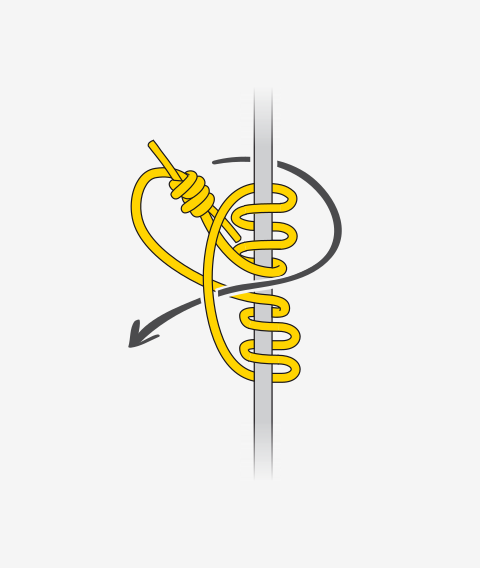
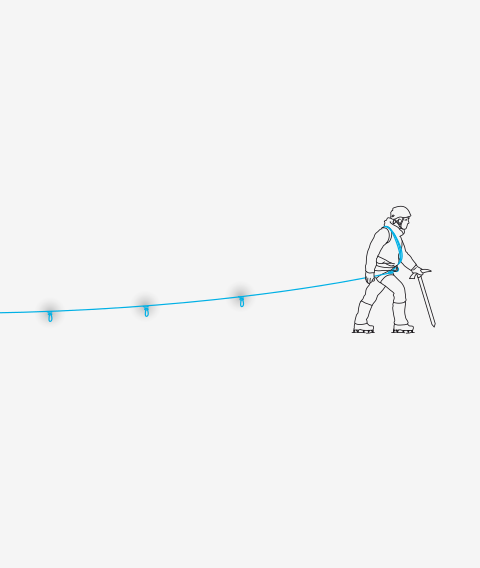
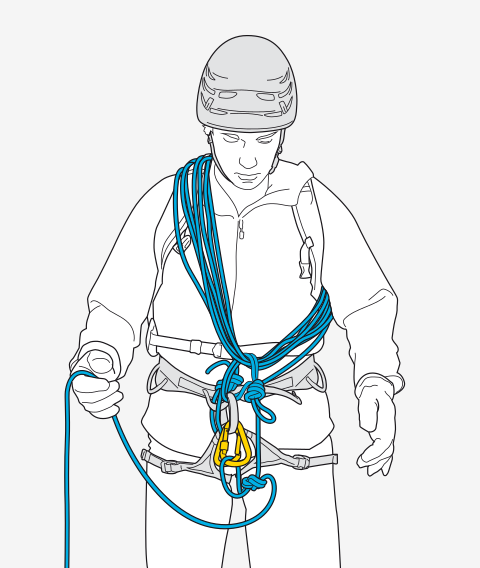
Three types of tie-in with or without chest coils.
Basic Techniques
Warning
- Carefully read the Instructions for Use referenced in this Tech Tip before reading the Tech Tip itself. You must have read and understood the Instructions for Use to understand this supplementary information.
- Performing these techniques requires specific training. Work with a professional to confirm your ability to perform these techniques safely and independently before attempting them unsupervised.
- We provide examples of techniques related to your activity. Other techniques not described here may also exist.
1. With blocked chest coils
For even terrain requiring little variation in spacing of the team members.
Advantages:
- Coils are stabilized, comfortable.
- Tie-in at end of rope.
Disadvantages:
- Rope adjustments difficult.
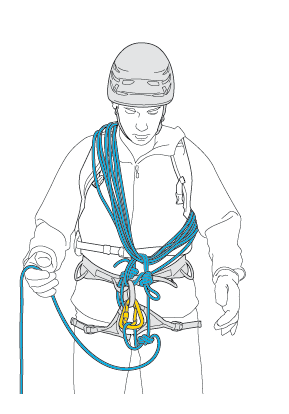
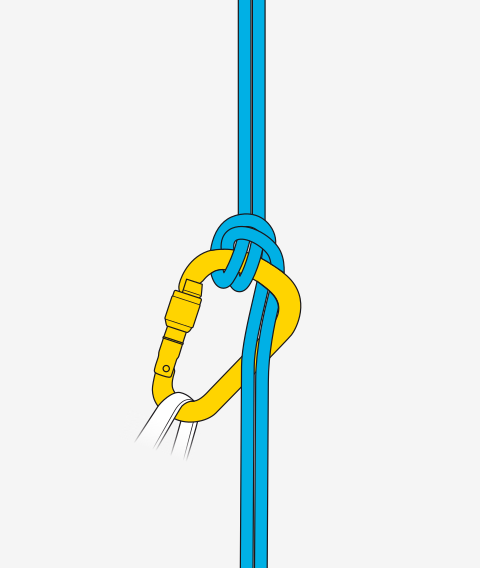
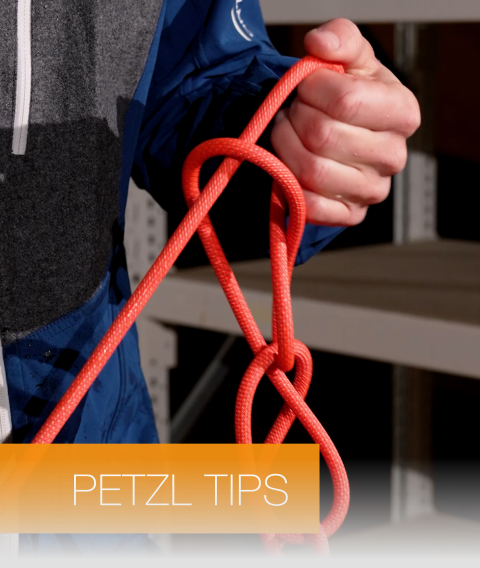
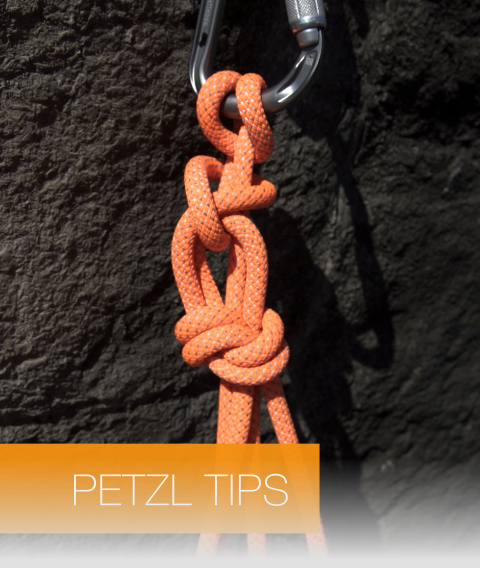
Tie-in on carabiner with figure-eight knot
Advantages:
- Reliable over time if knot is properly tied.
Disadvantages:
- Long to untie if knot is tightened by a fall.
- Use a directional carabiner or two reversed locking carabiners.
2. With unblocked chest coils
For terrain requiring frequent adaptation in spacing of the team members.
Advantages:
- Quick rope adjustments.
- Tie-in at end of rope.
Disadvantages:
- The coils can become undone.
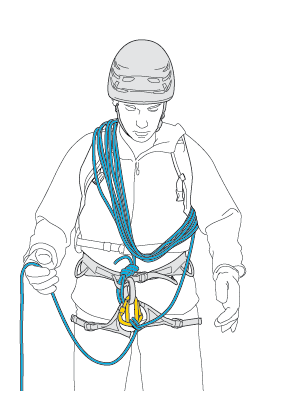
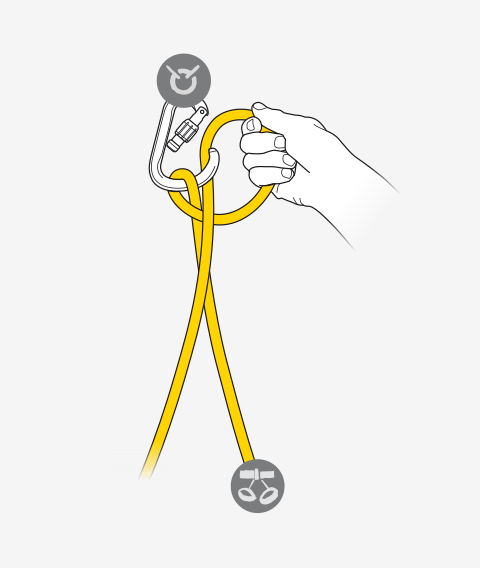
Tie-in on carabiner with a clove hitch
Advantages:
- Quick adjustments.
- Knot is easy to untie even when tightened by a fall.
Disadvantages:
- Use a directional carabiner or two reversed locking carabiners.
3. Reserve rope in bag, no chest coils
Set configuration for long walks.
Advantages:
- Comfortable to carry.
Disadvantages:
- Tie-in at end of rope is redone in case of emergency.
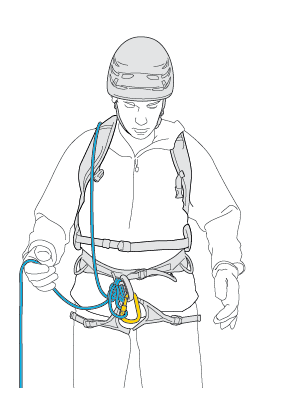
Tie-in to harness with a bowline knot
Advantages:
- Stays in place.
- Unties well, even when well-tightened.
Disadvantages:
- The loop must be secured with a carabiner.