Elongation
Product Information and Specifications
Two types of elongation are measured in the standard testing.
Warning
- Carefully read the Instructions for Use referenced in this Tech Tip before reading the Tech Tip itself. You must have read and understood the Instructions for Use to understand this supplementary information.
- Performing these techniques requires specific training. Work with a professional to confirm your ability to perform these techniques safely and independently before attempting them unsupervised.
- We provide examples of techniques related to your activity. Other techniques not described here may also exist.
Static elongation
Static elongation is the amount of rope stretch under an 80 kg load. The test is done on one strand for single and half rope, two strands for twin rope.
It is limited to:
- 10 % for single ropes (one strand of rope)
- 12 % for half ropes (one strand of rope)
- 10 % for twin ropes (two strands of rope)
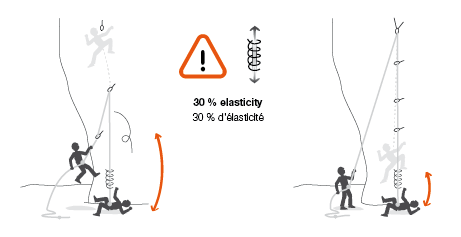
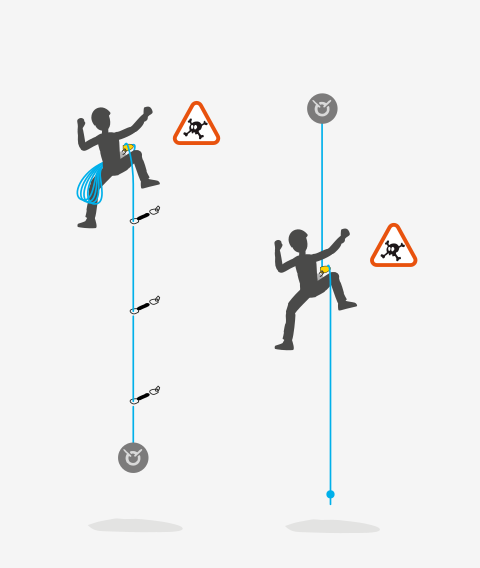
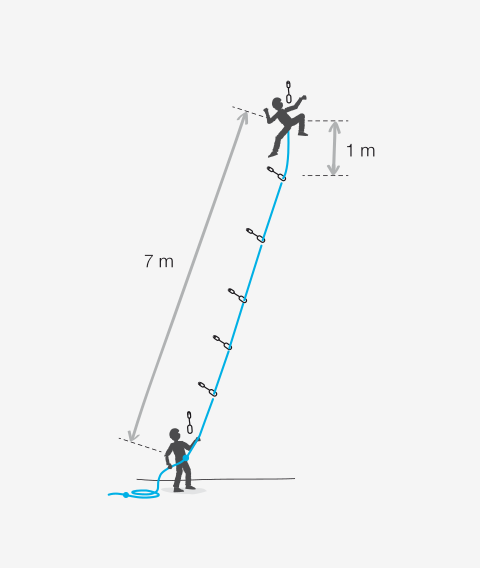
In use, static elongation is important mainly in a slingshot top-rope situation. When working a route, less stretch can be more convenient, to avoid finding yourself below the spot you want to work!
A low static elongation also helps avoid ground falls at the start of the climb.
Dynamic elongation
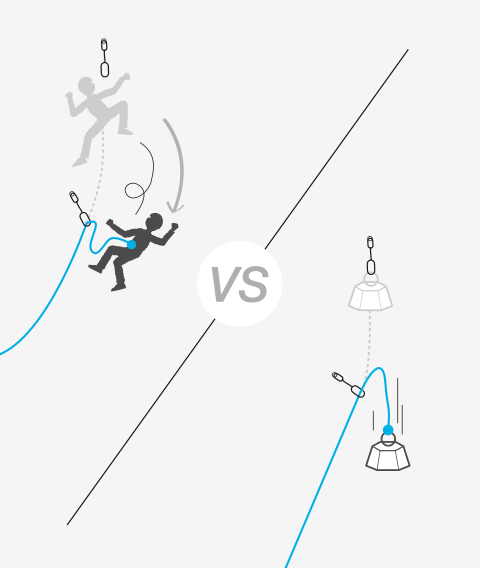
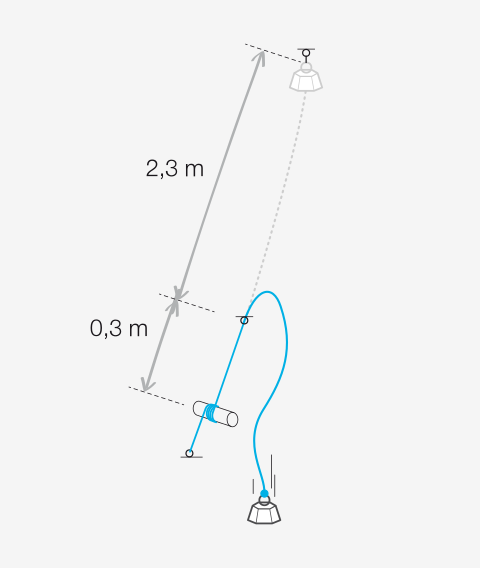
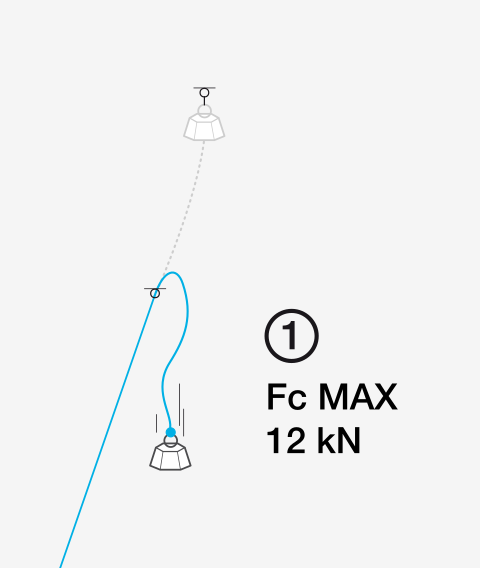
Dynamic elongation is the amount of rope stretch produced by the standard dynamic test. It must be less than 40%. As this test is extreme, it should be assumed that this is the maximum elongation. This maximum value will always be less in the field.
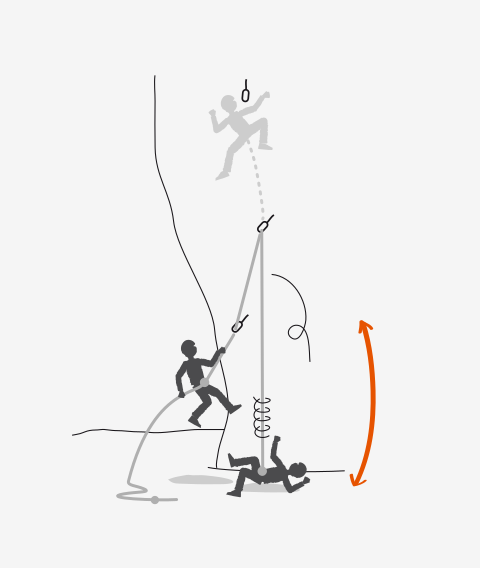
For a climbing fall, the dynamic elongation of the rope is between 10 and 40%.
A large dynamic elongation increases the risk of falling to the ground or on a ledge.