What is the impact force of a rope?
Product Information and Specifications
Warning
- Carefully read the Instructions for Use referenced in this Tech Tip before reading the Tech Tip itself. You must have read and understood the Instructions for Use to understand this supplementary information.
- Performing these techniques requires specific training. Work with a professional to confirm your ability to perform these techniques safely and independently before attempting them unsupervised.
- We provide examples of techniques related to your activity. Other techniques not described here may also exist.
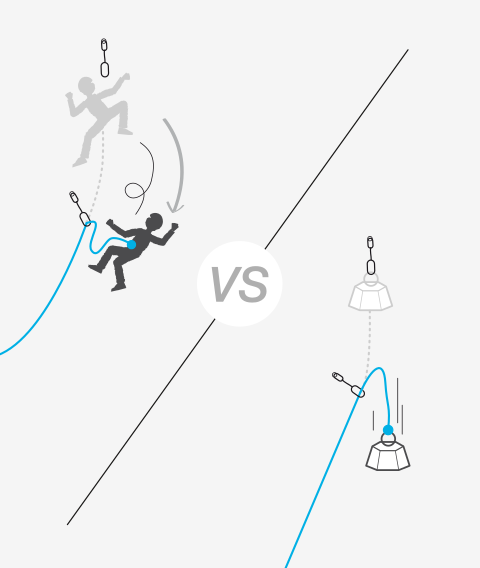
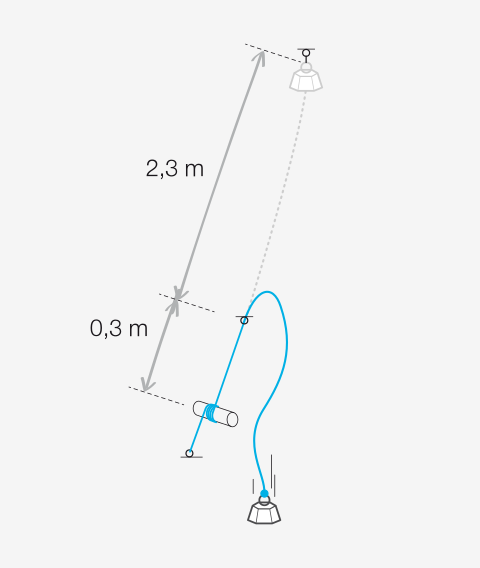
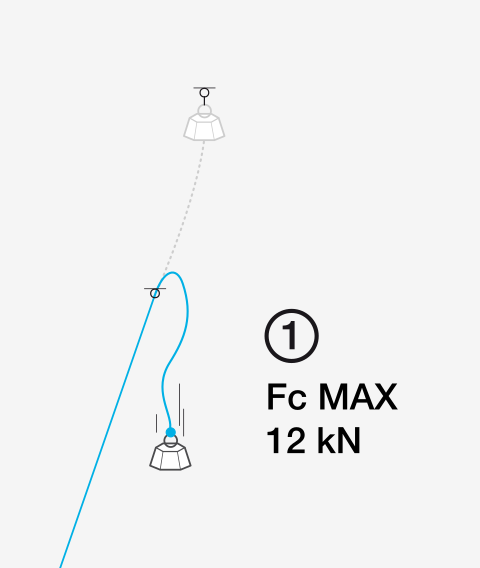
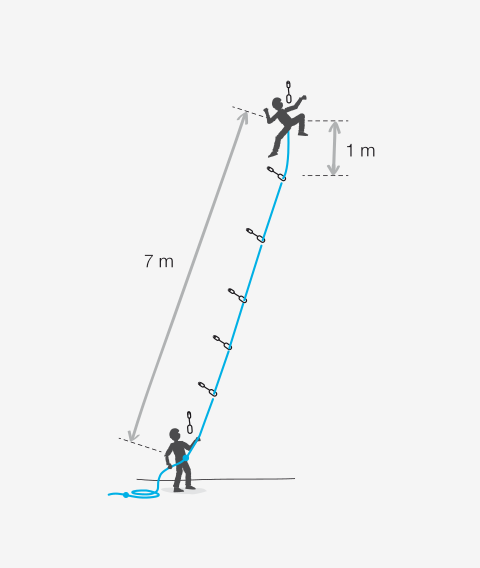
The impact force of a rope is the force transmitted by the rope to a mass in the standard test. The measurement is made at the falling mass, climber side. This impact force is not representative of actual forces encountered in a climbing fall. The dynamic test of the standard is an extreme test, as it simulates a factor 1.77 fall with a metal mass, with the rope attached to a fixed point.
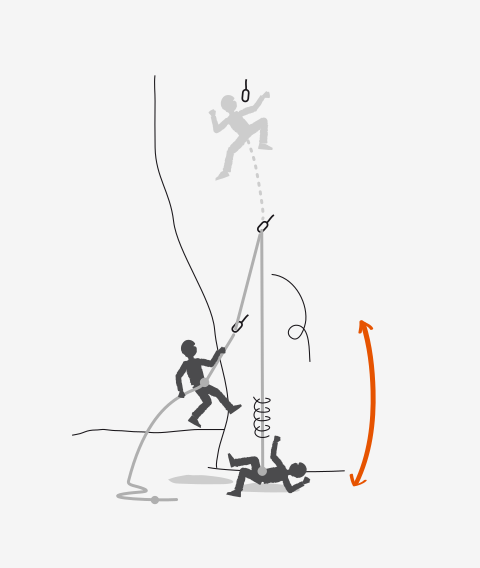
In practice, numerous factors can limit these forces: energy absorption by the climber's and belayer's bodies, rope slippage in the belay device, belayer displacement, deformation of the harness...
| Rope type | Test mass | Max. impact force | Number of falls | |
|---|---|---|---|---|
 |
Single rope | 80 kg | 12 kN | 5 |
 |
Twin rope (on 2 strands) | 80 kg | 12 kN | 12 |
 |
Half rope (on 1 strand) | 55 kg | 8 kN | 5 |
| Rope type | Test mass | Max. impact force | Number of falls | |
|---|---|---|---|---|
|
Single rope | 80 kg | 12 kN | 5 |
|
Twin rope (on 2 strands) | 80 kg | 12 kN | 12 |
|
Half rope (on 1 strand) | 55 kg | 8 kN | 5 |
Explanation of table
The single rope on a single strand must withstand 5 successive falls. The impact force in the first fall cannot exceed 12 kN.